Friday, May 10, 2013

Establishing a No Fly Zone in Syria

USS Kearsarge launching a U.S. Marine Corps Harrier


With the security situation in Syria quickly degrading, American politicians are bickering over the question of establishing a no-fly zone over Syria. Obviously, there are legitimate concerns about this policy. There are financial costs to consider, worries of mission creep, allegations that U.S. intervention could further destabilize the country, and broader region, and making the us the potential target of terrorism. Furthermore, no one should rationally expect this to end up as another Libya, where the U.S. can "lead from behind." The European militaries involved with that operation exhausted their military reserves. By the end of the NATO led operation, the French air force was forced to drop concrete blocks on targets. Moreover, not only is France busy with Mali, but they also are facing heavy austerity measures. As I've pointed out before, France is the leading military power in the E.U. (other than the U.K., which distances itself from European Union most of the time) If Hollande doesn't take the initiative, it's doubtful that other European nations will intervene alongside America. Therefore, any intervention will mostly be bilateral between Israel and the United States.

So then, if we do decide to establish a NFZ, how should the military go about it in a way that minimizes economic costs while still fulfilling the policy requests of interventionists on Capitol Hill? First off, the author is going to presume that the political objectives of Washington are simple: to neuter the capabilities of the Syrian Air Force. Secondly, the scenario also presumes that the United States is willing to send enough assets to accomplish their stated goals (looking at past interventions involving no or little ground intervention, this assumption isn't too much of a logical jump).

If we wish to establish a no-fly zone over Syria, the first step is one that must be accomplished by American diplomats. Ambassadors must get the support of key regional actors to facilitate our needs for a military intervention.  According to an analysis done on no-fly zones by Stanford's Journal of Strategic Studies, support of key actors is vital to successfully establishing a NFZ. Certain countries like Turkey and Israel (despite a mutual despise for each other) are already on board with intervention. The major block in the road of intervention is the United Nations Security Council, whose permanent members must agree on intervention before it occurs. France and Britain will obviously back us, but Russia and China are different matters.

In regards to Moscow, officials are worrying that regime change will damage key Russian interests. This comes during a point in time where Russian policy revolves around reestablishing influence globally. Russian soft power isn't extensive or influential to begin with, and Syria is one of the few countries that the Kremlin could convince to work with them in the disaster that was the Russian Federation during the 90s and early 2000s. Since Putin took office, Russian influence in the Middle East has declined. Therefore, any change in the status quo that damages Russian influence regionally is something that the Kremlin is going to fight against. Moreover, the port of Tartus is the only Mediterranean port the Russians have, and is in many respects the only Russian naval facility capable of adequately force projecting (other than Avacha Bay).

Therefore, American officials should remind Russia that Assad will lose regardless of Western intervention. Supporting a no-fly zone, which is one of the only major demand the FSA has, gives America massive cookie points with the opposition. Among other things, America can easily get guarantees that the FSA council will allow the Russian port of Tartus to remain. The United States should strive to convince the Russians that the only way they can protect their interests is to work with the U.S. Moreover, officials should offer Putin a behind the scenes agreement to share intelligence on potential terrorist operations that aim to attack Russia for their initial support for Assad.

China is a much different case. The author has been unable to find any solid information of the underlying motivations of the PRC. There seems to be, however, a variety of theories. Some believe that China is protect its oil reserves in the country. Others believe that by protecting Assad, they are maintaining Iranian influence in the region, making Tehran less susceptible to invasion. It's also important to note that China was Syria's third largest importer in 2010. Whatever the reason, one should hope that the Chinese are articulating whatever strategic concern they have to U.S. officials.

Now then, for the purposes of this scenario, the presumption is that A. China and Russia stepped on board with the U.S. or B. the U.S. went honey badger and stopped giving a shit. Most likely, if any intervention is to occur, it will result from option A rather than B. So, how should the U.S. proceed with a no-fly zone?

According to Todd Harrison, there exists two forms of NFZs. The first is control, where patrols dominate the skies 24/7, exerting their will on hostile units below. An example of this is Iraq in the 1990s or, more recently, Libya in 2011. This gives the U.S. a wide range of options, including escalating intervention into striking ground units massacring civilians in cities. However, it is extremely costly, and creates the large possibility of mission creep. Moreover, it also involves striking down Syrian anti-air systems, which is arguably the most dense in the region. While many point to the fact that Israel was able to conduct strikes, this was done through crafty maneuvering through gaps in Syrian radar. A no-fly zone bent around control requires patrolling the entire country (or the parts you want to control), not just the areas where radar presence is weak.

The second, and more operationally and fiscally appealing, option is denial. Instead of exerting control over the battle space, just deny the enemy the use of it. This entails completely grounding the Syrian Air Force by attacking bases being used to house aircraft. At this point, the Syrian military has only 50 operational fixed aircraft, most of which aren't being used due to maintenance problems. Instead trainer aircraft are preferred. Then, you have maybe 90 helicopters that are fit for operation. Denying the Syrian Air Force use of these air craft, then, isn't all too difficult. Deploy naval assets and begin firing cruise missiles down at bases in the country. Chris Harmer, a naval analyst, estimates that it would take about 250 TLAMs to eradicate the Syrian's air power. In terms of cost, this would be about $350,000,000. While that seems like a scary, big number, it's actually quite cheap when you consider the benefits of the strikes.

Therefore, establishing a no-fly zone over Syria should center around denial, not control. Not only does this solve the issue of the Syrian Air Force, but it lessens the likelihood of mission creep. However, there still remains the question of if the United States should get involved in the violence. That's a question that policymakers must decide--and quickly. The United States has already missed the golden opportunity to get involved. Deciding to intervene 6 or 9 months might be too late to do anything productive.

--Tom

Monday, February 25, 2013

A History of Afghanistan from 1973 to 1989

Afghanistan has always been known for being on the cutting edge of military technology
Afghanistan has, since the 1980's when Operation Cyclone began, been a series of American policy failures committed by the Reagan, Bush Senior, Clinton, Bush Junior, and, most recently, Obama administrations--the failures on the parts of the first three led to the September 11th attacks, whereas the failures of the latter two have led us to a questionable future for joint Afghan and American security.

Therefore, I have decided to start on the first post of a saga dedicated to the very unique situation of Afghanistan: A History of Afghanistan from 1973 to 1989, History of Afghanistan from 1989 to September 11th, 2001, Analyzing the Failures of the Afghan War from 2001 to Today, and Creating a Viable Post-2014 Afghan Strategy. Remember, I am NOT an expert on Afghanistan, and I would suggest you read some kind of book on the history of Afghanistan if given the chance. With that said, enjoy.

Lead Up to the Soviet Invasion of Afghanistan in 1979

Most Americans know little about the Soviet invasion of Afghanistan in 1979, even fewer know about the events preceding the Soviet intrusion (or, depending on how you look at it, intervention), and a very minuscule amount know about anything before that.

Basically, for a very, very, very long time, Afghanistan was united under a monarch--that is, a king. Yes, Afghanistan had a royal family. In fact, it still has one today (in a sense; I attached a link to the current head of Barakzai House below). Actually, before the United States established a new Afghan government after the fall of the Taliban in late 2001, we seek'd out and received the graces of the previously exiled ruler, King Zahir Shah (1914-2007), whom we viewed as the official head of the Afghan state at the time. What happened, though? How was he exiled, and why?

In the summer of 1973, King Zahir Shah was enjoying the luxury of, well, being the head of the Afghan state. While playing a friendly game of volleyball, Zahir was accidentally hit in the eye, requiring him to be flown into London to receive treatment for the subsequent eye hemorrhage. After the operation was complete, Zahir decided to take a well deserved vacation. While the recovering monarch was in Italy, Daoud Khan, the former Prime Minister of Afghanistan and retired military officer, took advantage of the King's leave of absence to painlessly overthrow the regime in a bloodless coup after receiving the backing of the Afghan Army.

Over the next 5 years, the situation of Afghanistan deteriorated quickly. Daoud tried to maintain the government as a strong, central force that efficiently ran the country. Unfortunatrely for Daoud, though, his efforts produced few fruits. The very basis of the Afghan government for 50 years before Daoud was one that was Pashtun led. His coup shook the very foundations of the political structure of the entire country. Government relies on the people respecting authority (either through fear or admiration), which Daoud was unable to create in the unstable political climate of the country.

In April 1978, Daoud's luck ran out when a famous Communist leader, Mir Akbar Khyber, was assassinated by government forces. In response, over 15,000 activists attended Mir's funeral, protesting and demanding justice for his death. Daoud responded in the worst way possible: by infuriating even more people. Afraid, he began to round up various leaders within communist communities, inciting even further outrage.

In response to all this, a small corp of Army and Air Force officers organized the second coup of the decade (called the Saur Revolution), this time with more blood. During the short rebellion, Daoud was killed, and the military handed control of the country to the Revolutionary Council headed by Nur Mohammad Taraki on April 30th. Taraki's first decree was reestablishing the government as the Democratic Republic of Afghanistan. Alas, another communist country now graced the earth, and the Afghan people lived happily ever after, united by a picture of Lenin in every of home.

If only.

Moscow responded to this change in power by sending the fledging communist government a myriad of various weapons: AK-47s, pistols, Armored Personnel Carriers, etc. The overall goal of the Kremlin was to stabilize the internal situation within Afghanistan by giving the D.R.A. the proper tools and resources to maintain control. However, factional warfare become widespread, and Taraki began utilizing military forces to brutally crush revolts, conduct mass arrests, torture civilians, and preform executions on a colossal level (Hm, looks like he really got the Commie thing down pat, huh?). One by one, the Kunar Province, Hindu Kush, and Badakshan Province became fortresses for anti-government Pashtun fighters unhappy with the change in the status quo.

As security continued to deteriorate, Afghanistan soon became a hellish place; even for those that lived behind the physical and figurative walls of immunity: Ambassadors. In 1979, Adolph Dubs, the U.S. ambassador to Afghanistan was captured by Islamic militants and killed after a botched attempt by Afghan policemen to rescue the diplomat.

Finally, after the 17th Afghan Division, sent to contain a series of violent demonstrations in Herat, became nonexistent in all but name due to mass desertions, Taraki pleaded with the U.S.S.R. for military assistance. The Soviets responded by promising weapons and military advisors to be sent into the country.

The Soviet War in Afghanistan

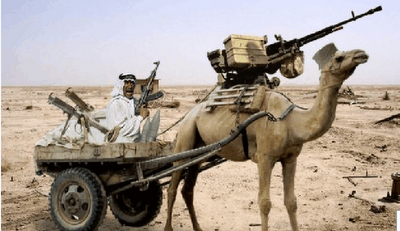
Damn camels.

While Soviet officials were mulling over a possible intervention staged by military forces, the situation in Herat continued to spiral downwards. Rebels had seized control of the city, and began a brutish hunt for government officials and weapons stockpiles. When Afghan Army finally managed to secure the city again after 3 days of brutal fighting, casualties on all sides had neared the 5,000 mark.

In September, Taraki was arrested and summarily executed by Hafizullah Amin, an Afghan politician. Amin subsequently rose to power as the new Afghani President. Unfortunately for him, the tenure wouldn't last long. Previously, Soviet Union had made it publicly aware that they did not wish to see Amin lead Afghanistan through Pravda (the official government newspaper). While in private, Russian officials agree'd that he was too lenient towards the west, and believed (very incorrectly) that he had contacts with the C.I.A. The distrust finally came to an epitaph when, after weeks of deliberation, the Soviet Union finally sent an intervening force to Afghanistan on Christmas Eve of 1979.

By December 27th, 50,000 Russian troops were in the Afghanistan theater of war. The proverbial snowball accumulated fast and took down all who stood in the disgruntled bear's way. KGB special forces infiltrated and then attacked the Afghan presidential palace, killing Amin. Quickly, the Soviet Union put in place Brabrak Karamal to lead the government, who addressed the nation shortly after Amin was killed via radio.

Moscow and Kabul initially tried to unite the Afghan peoples, and win their alligience through deeds of goodwill. Karamal released thousands of political prisoners who were unfairly arrested by Taraki and Daoud, restored the religiously significant green stripe to the Afghan flag, appointed non party members to government, and swore alliegence to Islam. However, Soviet and D.R.A. attempts at forging unity and implementing a long term state building plan were futile in effort. U.S. intelligence officials concluded the Afghan government and its people were separated by "a vast [cultural and a geographic] gulf" Worse, economic conditions in the country quickly attenuated after the Soviet invasion.

For me, I think the aspect that most people ignore while studying this war is the economic conditions that fermented under the Soviet watch. Absolutely no successful efforts were made to foster economic vitality in the infant government, resulting in the stunting of the Afghan economy. Major demographic movements (brought on by violence in the rural areas) harmed agricultural markets and supply when many former farmers moved to the cities. The healthcare system was overburdened, resulting in high rates of sickness to occur. And, to make matters even worse, skilled laborers and academics quickly left the country en masse to protect themselves and their families.

While the social and economic situations in the country continued to degrade, the Soviets began implementing their security plan to improve to ability of the Afghan government to establish and maintain control. The plan was modeled off the Soviet's recipe for success in the realm of domestic surpression: to create a strong military force, and a robust secret police corps.

Much like ISAF forces today, the Soviets dealt with a local military that was plagued by factionalism and low morale, creating an inefficiency that prevented the army from being an operationally capable force. The largest loss of manpower wasn't even from combat most of the time, it was from desertion. Each year, the Afghan military lost 20,000 soldiers to desertion. According to the head of the Afghan Beurea for ISI (Pakistani intelligence services, basically), the Soviets were relying on an indeginious army that had to lock their soldiers in to prevent them from deserting. By the mid 80's, the Afghan Army was a hollowed force, standing at a mere 30,000 out of their original 90,000 soldiers.

The failures of Afghanistan's army to properly deal with the muhjideen problem prompted a military surge by Russian commanders in 1980. Soviet forces flooded into major cities to establish control over the troubled country. However, stabilization was not the end result. Instead, it began what is considered to be the most successful insurgency in modern times.

The Soviets managed to secure major Afghan cities, creating a safe haven for Afghan and Russian soldiers. However, the Soviet Union failed in creating a secure environment around the more rural. Areas, even after 2 years of fighting, the D.R.A. controlled less than 15% of rural territory (remember that large "gulf" U.S. analysts were talking about?).

The Soviets struggled to even militarily control these rural areas, with military "success" generally coming the machine guns of an Mi-24. Helicopters are incapable of controlling ground, for that, you need ground soldiers. However, Soviet incursions into these areas were oftentimes meet with humiliating defeat. For example, Soviet commanders longed tried to control the Panjshir Valley, but every attempt to go in a wrestle control from the "Lion of the Panjshir" (aka Ahmed Massoud) ended in a long line of smoldering armored vehicles and dead soldiers.

The Mujihideen was finding itself increasingly victorious against their Communist foes, a fact that always strike'd me as interesting. The Mujihideen wasn't necessarily a singular, cohesive movement. Rather, it was a loose conglomerate of 7 major parties (nicknamed the Peshawar Seven) that mostly dispised each other. Unfortunately for the Soviet Union, the one thing they hated more than each other were the Russian aggressors that had invaded their homeland (or, for many members who were foreign born, their muslim brother's homeland). Of course, a majority of this military victory was spurred by the continuous supply flooding in from Pakistan and the United States.

For Pakistan, the Russian invasion of Afghanistan was apart of what they viewed as a much larger plan to establish another sphere of regional control. The ISI General Akhtar Khan told Pakistani president Muhammad Zia-ul-Haq that Afghanistan was the stepping stone towards invading his precious country. Moved by the existential prophecy of destruction, Zia-ul-Haq authorized a massive expansion of the ISI and allowed them to launch a variety of cover operations into Afghanistan. Special Paki teams swarmed the country, covertly supply, training, and aiding the Mujihideen in their ongoing struggle against their unholy foe.

Primarily, the Mujihideen's "holy" struggle relied on two tactics. The first of which was the raid, and the second of which was the ambush. The guerrilla strategy of "Death by a thousand cuts", as Mohammad Yousaf called it, was the only way for an ill trained and equipped group of Afghan tribesman to defeat the Eurasian superpower. Trained primarily for a conventional war against NATO, Soviet conscripts were extremely vulnerable to frequent and deadly attacks by the Afghan "ghosts".

The Soviet's overall strategy in the embattled country hinged on military might, which was extremely inefficient and ineffective. The majority of military analysts now say that in order for the Soviets to have had even a remote chance of military victory against the Mujihideen, they would have needed more than 300,000 soldiers actively conducting operations.

Further stacking the cards against the Soviet Union were the victories made by the Mujihideen in gathering popular support in the local areas. Soviet commanders continued to alienate the local population, failing to ever win even the remotest amounts of support. Arguably, this was the greatest failure of the Soviet military, as they failed to recognize the overall question of an insurgency: "Who deserves to have political rule?" Insurgents rely heavily on local support in order to sufficiently operate, to take away this support is to remove their operational lifeline.

If the Soviets were to have taken anything from the experiences of the United States in Vietnam, it should have been the strategy employed by the United States Marine Corps to undermine the Viet Cong early on into the war. In order to weaken the hold the V.C. had on South Vietnamese villages, commanders placed in every village a Marine squad to erect and support a local village fighting for to counter V.C. in the area. Of course, in order to do that, one must first when over these communities, which is easier said than done. However, attempting to improve economic conditions and refraining from killing Afghans and/or their property en masse would have been a good start.

In 1985, the United States, thanks to the eccentric Charlie Wilson, increased its support of the Mujihideen to $250,000,000 in military equipment, with most influential of this support coming from the infamous Stinger missile. The FIM-92 Stinger missile undermined the only thing the Soviets had going for them: air support.  Equipped with large amounts of these anti air weapons, the Mujihideen was able to adequately fight the deadly Hinds with devastating effectiveness.

Well armed by Pakistani and U.S. agencies, the Peshawar Seven became a very slow bleed on the Soviet economy. Very limited resources were pooled together and sent towards winning the losing fight in Afghanistan, leaving empty shelves of food and other essential goods for citizens back in the Motherland. Finally, in 1988, the Soviet Union began a massive pull out of Afghanistan, with all forces withdrawn by February of 1989. Of course, the vicious Afghan fighters never gave the Soviets the benefit of the doubt, launching continual attacks on Soviet forces as they withdrew from the country, inflicting upwards to over 500 killed in action on Russian forces.

I want to point out a reoccurring theme in all of these escapades by both internal and external forces in the country: the attempt to create a central government that successfully exerted control over all corners of the country. The basis of an Afghan government that's successful, in my opinion, is one that accepts the realistic condition of warlordism in the tribal areas and Southern Afghanistan. In other words, the Afghan government must convince various tribal chiefs and warlords to align themselves to the Afghani government in exchange for money and semi-autonomy. But more on that later.

- Tom


Sources
 In the Graveyard of Empires by Seth Green
 Afghanistan: An Entire Military History from Alexander the Great to the Taliban by Stephan Tanner
Various websites that I will link to later

Sunday, February 17, 2013

The Invisible War China is Launching on the United States


Overview

As we enter into early 2013, the new emerging focus within the Department of Defense--alongside the private sector--is the evermore crucial question of creating a solid defense against the plethora of cyber attacks on valuable national assets. These attacks are far ranging, from a simple hacktivist defacing a meat packaging company's website with slogans about saving cows (lol), to intricate and damaging heists of intellectual information by those that seek to gain an upper hand in markets.

In the past years, media outlets have become virtual whistleblowers about these attacks, as business officials who are the subject of belligerent cyber incursions fail to report their breaches out of fear of losing consumer trust. *The resulting governmental and public awareness has led to a vitalized effort to secure our critical infrastructure and corporate assets.* Prestigious universities such as George Washington and Princeton are offering top tier cyber security degrees and both the undergraduate and masters level. Former Secretary of Defense Leon Panetta signed a series of last second initiatives designed at expanding our 'cyber soldiers' from a measly 900 to almost 5,000, with Hagel picking up the torch on cyber defense issues. Obama, frustrated with congressional stratification, signed an executive cyber security order aimed at increasing government and corporate communication over security flaws. In effect, it's actually very similar to CISPA.

Of course, a mere 15 years ago most security and international affairs officials viewed cyber security as mere blip on the proverbial radar. The concept of a mass cyber attack that left our country in shambles was best left to writers of science fiction, cyberpunk sagas, and Hollywood screenplays. It's a bit of delicious irony that the spoiled directors in sunny California and the farfetched cyberpunk writers many like to poke fun at actually ended up predicting one of the largest threats to American national security. At least, it is to me.

Hollywood prophecies fulfilled set aside, the primary belligerent in the cyberbattlefield is China. Last quarter alone, China accounted for 30% of all cyber attacks in the third quarter of 2012, a 14% increase from the previous quarter. Concurrently, the economic damage of these attacks have also increased. According to President Obama in a speech given in 2009, the economic cost of these attacks range upwards to a trillion dollars per year (all cyber attacks, not just China). This high reward, low cost is exactly why nation states such as China (and to a lesser extent Iran) are turning increasingly to the cyber domain to further their national objectives. Through these substantial and sustained attacks, hostile nations are able to extoll a large economic tax on America that's on par with physical attacks, minus the large scale retaliation. 

In Clausewitz's trinity that he describes as the driving force of war, he lays out three major factors: 1. Violent Emotion, 2. Chance and Probability, and 3. Political rationality. It's rather hard to rally a country to war (which is done through invoking a violent emotion towards the enemy) over loss of data, it's similar to asking people to sign away their lives because someone killed your cows. Of course, a cyber attack thats leads to a massive loss of life, such as a logic bomb in our power grid, would likely stir up a slew of "war hawks" to the political stage.


"I promise to end the tyrannical murder of cows, and bring moocracy to farms everywhere!"
Furthermore, given the fact that cyber espionage is generally hard to positively trace back to the conspirator, these attacks deny the diplomatic leverage on the world stage (U.N.) that physical attacks allow. Now, again, this might change if one of these attacks ends up in a sizable loss of life, people might forgo the need for such concrete evidence.

How Do We Respond to these Attacks?

Given that the field of cyber security is fairly new, the extent to which these strategies have been validated is rather low. Until now, there has been no large government wide initiative to create a robust cyber defense infrastructure. Therefore, these are mostly musings more than anything.

It is important to remember that the United States is constrained in it's possible response options. As I've mentioned before, since these attacks have only produced economic damages, and no physical impairment, its nearly impossible to mobilize a civilian movement. Further, given the economic interdependence between the two countries and the domestic decline of the American domestic sphere, it's most likely against U.S. interests to get involved in another bloody and prolonged conflict in Asia. 

So then, we are left with three large options (remember, none of these are mutually exclusive):

1. Responding with offensive cyber operations 

2. Diplomatic pressures


3. Increasing cyber security


Option 1: Responding with Offensive Cyber Operations

Summed up, this is the 'eye for an eye' approach. While I'm sure that we in engage in minor cyber espionage activities in country, I doubt any of these operations are very extensive. With this option, the United States would not only continue to expand its cyber security capabilities, but also an injection of steroids its cyber offensive capabilities, and subsequently putting the latter to good use.

There are a variety of ways America can attack China, as in many ways, China is more vulnerable to attack than the U.S. is. Due to the overly restrictive nature of the Chinese authoritarian regime, the network systems there are most likely more centralized than the systems in the United States (see note). For those relatively unfamiliar with the adverse effects of centralization, it basically creates an interconnected system of networks to one huge host (or a group of central hosts/hubs). While the primary gain is an increase in technological efficiency (if established properly), the resulting weakness is rather obvious: take down the central system(s), and the entire sphere of networks collapses with it.

Now, shutting down an entire hub might be drastic, but launching attacks on networks controlling business operations or oil installations could result in a pretty heavy penny on the Chinese economy. Sabotaging the defense industry in China, for example, could result in beneficial gains for the United States and her allies. While an attack on Chinese Command and Control networks might dissuade them from being as belligerent when it comes to territorial issues.

2. Diplomatic Pressures
Even though a world wide based campaign against Chinese attacks is unlikely, the United States has a variety of diplomatic tools at its disposal to try and the Chinese to put a leash on its "cyber militias". For example, we could step up pressure on the North Korean regime by putting in place a large embargo on all items except food and aid, increase military aid to South Korea, Japan, Taiwan, and India, as well as reinforcing their territorial claims, or continue demands that if China doesn't cease their illegal attacks, there will be negative reciperical effects (primarily, economic through trade restrictions).


3. Increasing Cyber Security

Of course, the most effective way to protect our assets is to increase our infrastructure that is designed to counter act illegal incursions into our cyberspace. Luckily, we seem to be doing this, with an increase in our cyber force, and grumblings of endings our heavy relience on Chinese telecommunications companies (which often act as fronts for Chinese espionage). However, there still exists the need of improvement. As my teacher put, "We need to find the biggest nerds living in their parents basement, and drag them out into daylight to work for us." A sustained effort to test and retest the sturdiness of our cyber defenses is going to be needed.


-Tom

** I alleged that are government ignored many of the threats of cyberwarfare in an earlier post, and rather ironically, the government came out with plans to fill these gaps a few days after I made the post.

Note: The comment on centralization stems primarily from observations I have made on the behavior of the Chinese government

UPDATES:

http://money.cnn.com/2013/02/19/technology/china-military-cybercrime/index.html?hpt=wo_c2

- Mandiat, who released a live video of a Chinese hacker... well... hacking, alleged in a 60 page report that the Chinese military was heading up cyber espionage operations against the United States. While this does not come as a shock, it is interesting. Typically, the Chinese government utilized so-called "cyber militias" to attack the U.S. in an attempt to strengthen their plausible deniability claims.

- According to the Military Times, the United States is poised to retaliate by putting into place fines, penalties, and trade restrictions; China responded to U.S. allegations by affirming their stance of not getting involved with cyber attacks. They also claimed to have traced attacks back to the U.S., though most experts state that the U.S. government is not responsible.

Sunday, February 10, 2013

What Video Games Can Teach Policymakers


Let’s face it, a huge part of study in international relations is based around the utilization of various computer and table top simulations. Through these simulations, politicians, commanders, and academics are given a better idea of how a crisis might unfold or even be stopped. However, does anybody ever think about how a video game can give top players an idea of the current dynamic of our global sphere? Personally, I doubt it, and it’s a missed opportunity for learning.

Recently, an extremely large battle occurred in an online MMO game called EvE (which is a giant space simulator). The battle’s news quickly spread across the Internet, as the involved player count nearly hit 3000. The battle, known as the Battle of Asakai, occurred when tensions between two player alliances, CFC and TEST, over mining rights finally came to a head on January 27th.

 Originally working together in order to create a monopoly on a particularly valuable in game resource, they had a falling out after a series of territorial disagreements. The resulting relationship gave birth to a variety of small raids between the two syndicates. In an effort to mitigate the chance of a potentially devastating conflict, the two organizations created a de facto treaty agreeing to not attack the economical important minerals they both rely on. 

However, this “treaty” was soon broken after Goonswarm accidently warped in a capital ship (worth 3000 USD in the game’s currency) to an ongoing raid. The response on behalf of TEST was quick, as they began to hail in various ships belong to their alliance, and requested others to intervene on their behalf. The accidental intrusion turned into a full-scale war between both of the alliances, resulting in a decisive loss for Goonswarm.

What can this virtual incident teach policymakers? Incidents have the potential to devolve into large and costly conflicts.  Conflicts have been started throughout history by accidents, from the explosion on the USS Maine that started the Spanish-American War to the run away dog that sparked a small border skirmish between Greece and Bulgaria. In a time where tensions in the Pacific over territory rights have hit an all time high, it’s important for everyone to remember that even small mistakes have deadly consequences.

Tuesday, January 29, 2013

What Everyone is Missing About the Mali Intervention

French soldier manning an APC's 50 caliber machine gun

On this blog, I highlighted the need of a Western intervention into Mali, more specifically, I went through a comprehensive strategy I thought Western and regional powers should employ in order to meet a chance of victory on the battlefield. So far, France has fulfilled my desired role for them by providing a slab of special forces and regular forces alongside air elements to participate in a (so far successful) ground operation. However, their intervention has been the subject of heavy scrutiny by Western media outlets and analysts. As expected, the French have been pummeled by a couple criticisms, namely, their reliance of American and British logistical prowess.

As valid as these criticisms may be, I think most people are missing the implication of French intervention in Mali. Up until recently, European interventions, especially against armed combatants, have produced little to no tangible benefits. Mostly, they would send some soldiers, set up a base, and then yell really, really loudly that it's very wrong for the bad guys to rape women, burn villages, and kill children. Shockingly, the bad guys would continue right along with their genocides or what have you. Okay, so maybe that's a bit of an over exaggeration, but when their strategy of not actually truly getting involved didn't work, the situation would either continue to deteriorate or they'd grovel to America.

But within the past few years, European powers have gotten involved with the intention of producing tangible benefits, even if that means America isn't going to be providing a leading role. For example, Libya, European forces launched a large air campaign against government forces, maintaining a no fly zone and striking ground targets. Granted, they were barely able to sustain what should have been a simple operation, and rumors have floated that France was actually dropping concrete blocks near the end, but it was ultimately successful nonetheless.

Now, this streak is continuing with the French intervention into Mali. Ground troops have been deployed successfully onto the field of battle in what is a unilateral Western action against a well armed foe. Sure, it's sad that the French have to rely so heavily on America and the United Kingdom in order to get their troops to the A.O. (Area of Operation), but it's a steep in the right direction.

What people have to understand is typically international interests precede military expansion. A country isn't going to amass a large military force unless they are going to use them to further meet national objectives. You can't expect a group of nations that have primarily relied on America militarily since the end of World War Two to suddenly be able to conduct operations large scale. No, it's a process. And with a further decline of America on the global scene, Europe will be forced to act more unilaterally in military operations. Thus requiring them to create a more robust military force to meet their needs, which will be slowly created in the next 10 to 15 years, in my opinion.

Of course, the deciding factor of wether or not Europe actually continues with this level of international involvement depends on wether or not the current economic crisis cripples the European Union. If it does, you might expect to see their militaries devolve even further.

With that said, one could argue that the Libyan and Malian interventions were the product of French (who holds a lot of weight in the E.U., I think a French expansion will result in an E.U. wide expansion) sympathy towards former European colonies (especially it's own), and that this isn't the beginning of a more internationally involved Europe.

- Tom

Sunday, January 20, 2013

Milestone - 1000 views

Throw the confetti, because The Line of Steel has reached it's first milestone: 1000 views! I'm not going to lie, even though it's a small accomplishment, the fact that hundreds of people have come to this blog of mine fills me with a little pride. I can only hope that this blog continues to meet success as time goes on. Thanks to all the readers who have made this milestone possible, I can only hope that you continue to visit.

- Tom

P.S. Sometime tomorrow or Tuesday I plan to update the blog with a new post. It's the first of about three posts I will be publishing on Afghanistan

Friday, January 11, 2013

The Externalization of American Security

*Make note, externalization in this context refers to the attempt by American officials to create an outside image of security, rather than admit and then seal critical flaws

I think that one of the most astute observations one can draw from our 11 year long struggle with terrorism is the the following: The primary problem with American security culture is that it externalizes  security in an attempt to paint an image of security; that is, officials either publicly or privately admit to others that America's security infrastructure is fine, when in reality it suffers from several glaring flaws.

Our country, on multiple levels, not just militarily, attempts to convince itself of safety. Due to the bureaucratic nature of our security system, we are left with a massive organization unwilling or unable to adapt to emerging threats until it is oftentimes too late.

Bureacracies are designed to combat or conduct an operation in a certain way all the time. Thusly, certain Standard Operating Procedures are developed and refined, followed by indoctrination of these principles to the employees of the organization; these SOPs effectively become the gospel to these workers within the beuracratic hive.

The problem, though, is that our security environment demands perpetual adaption to a variety of existential and non-existensial threats to our country's interests and way of life. Standard Operating Procedures only work if the threat is constant or slow changing, something that is virtually nonexistent in our world today.

For example, the idea of an attempt akin to 9/11 was scoffed at by the upper echelons of military and civilian leadership. It was thought that no adversary would attempt such a daring attack on our country; and even if it did try, our military was certainly prepared enough to rapidly respond to and eliminate the terrorist entity before the attack would finish.

However, the communications between the White House, F.A.A., and Air Force was absolutely terrible. There existed a lack certain strategies in place to deal with the terrorist threat that officials knew about, but were too stubborn to adapt to. C.I.A. agents warned officials months prior that such an attack could possibly take place a few months before 9/11. The response was weak, nonchalant even. There was no way the U.S. could be attacked like that? Right? Wrong.

Fast forward a little over a decade, officials still seem to ignore glaring gaps in our security (there are exceptions, luckily), with little regards to large weaknesses in our defense. The most existential to our country, of course, is our cyber infrastructure.

Panetta recently commented that our nation was in a pre-9/11 moment in terms of cybersecurity, and that the United States needed to subsequently close this gap. Given that most of our infrastructure runs on computer networks, an attack to, say, our electrical grid could be potentially devastating to our economy. Yet, there have been no large initiatives by our government to actually seal this gap in our security, instead placing emphasis on non-critical issues (Though not apart of our government, Mitt Romney fits this role in his obsession with naval size; Obama, no doubt, is guilty of placing emphasis on noncritical issues as well).

However, applied to a purely military level, you see that our leaders in the Army, Navy, Air Force, and Marine Corp suffer from the same problem. In recent history, U.S. Army leaders initially tackled the insurgency problem in Iraq the same way they tackled the Iraqi Army, with little disregard to the massive differences between the two types of conflict.

For example, from an intelligence perspective, the military analyzed the composition of the terrorist cells after post-2003 invasion in the same the way they analyzed the composition of artillery, armored, infantry, and air units of the Iraqi military. Of course, this is grossly inappropriate for counter insurgency. The insurgent groups operate on a vastly different level, and one must consider the economic, social, and cultural conditions leading to these groups being manned in the first place.

Classical military theory lay'd down by Carl von Clausewitz in On War dictates that military force is the extension of political policy; meaning that military victory should lead to political victory as well. However, counter insurgency completely dislodges this school of thought. Military victory in the battlespace, as we now know, doesn't always translate into an accomplishment of our goals set forth by political leaders.

The failure of our military to accept this reality of what is called by William S. Lind as 4th Generational Warfare led us to the brink of disaster in both Afghanistan and Iraq. If it wasn't for Petraeus' bold questioning of American military decisions, the situation in both Iraq and Afghanistan might be vastly different.

Of course, the Army wasn't very receptive of Petraeus at first. In 2005, they send him to Combined Arms Center (ironically, a similar thing happened to Clausewitz when Prussian military leaders send him to krieg's academy after questioning his military ideals). Luckily for us, Petreaus fought against conformationism in our military, taking this time to develop COIN doctrine now used by our military.

In conclusion, America's security culture is in many respects unwilling to accept the various realities of new age threats. Instead, it insists on externalizing (or feigning) security to the public by creating a false image of security. Worse, there is an active struggle against innovation. Military commanders are promoted on basis of assimilation, not merit.

-Tom

Sources:
http://en.wikipedia.org/wiki/Fourth_generation_warfare
http://security.blogs.cnn.com/2012/10/12/panetta-cyber-threat-is-pre-911-moment/
From the Ground Up (p 138) by Emile Sampson
http://www.federalnewsradio.com/473/3110944/On-cyber-defense-US-stuck-at-the-starting-line